5th Grade Private School in Port Saint Lucie
Easy online application process
If approved, you may get your money as soon as the same day*
Questions? Talk to a real person
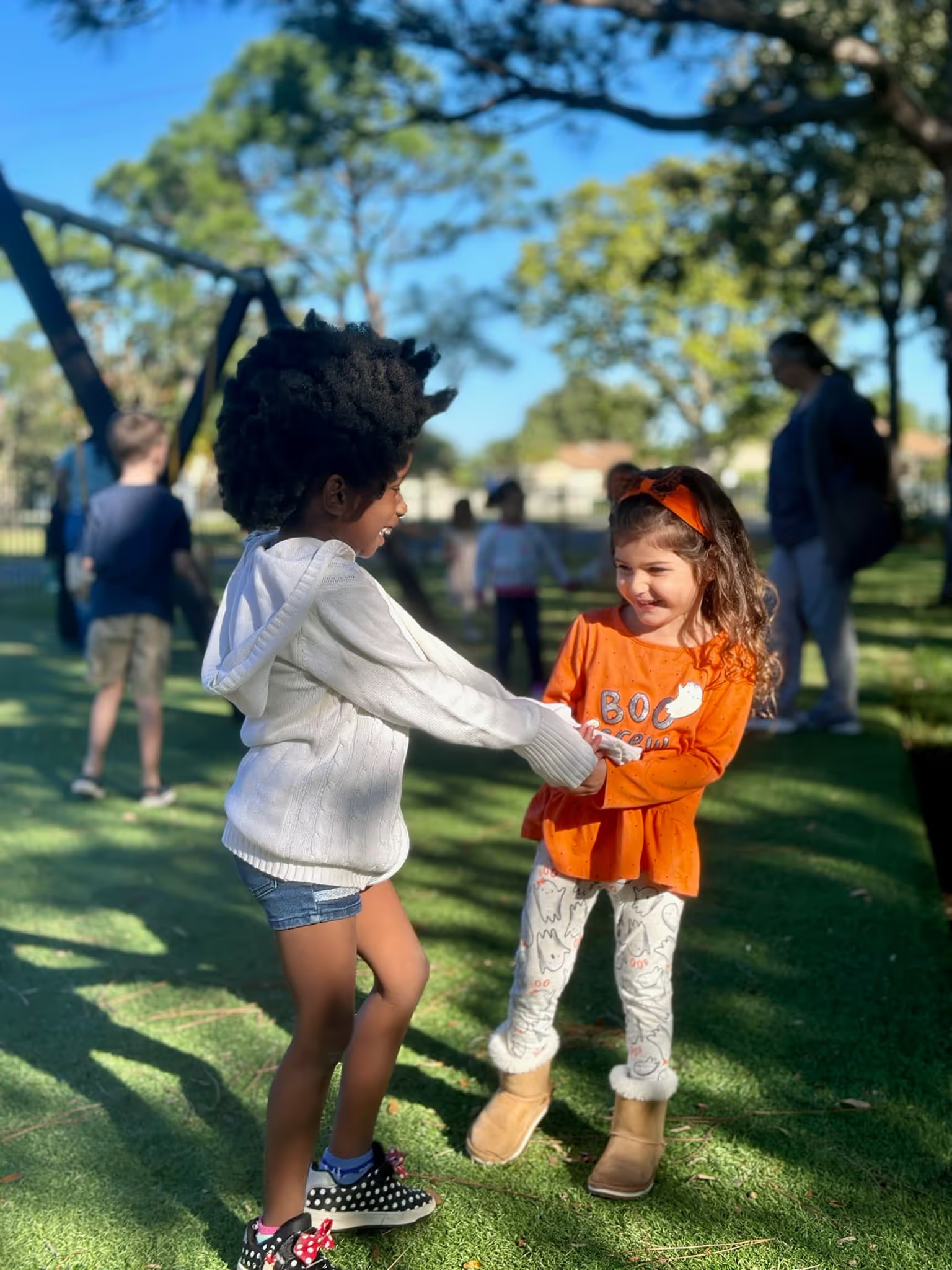
A 5th Grade Private School in Port Saint Lucie That Prepares Students for What’s Next
Fifth grade is a significant year in a child’s education. Students are growing in maturity, building stronger academic habits, and developing a clearer sense of who they are as learners. It is often a season where confidence, responsibility, and independent thinking begin to take shape in more visible ways. Families looking for a 5th grade private school port saint lucie are often seeking more than a place where assignments are completed and grades are recorded. They want a school where their child can be challenged with care, encouraged with purpose, and guided through an important upper-elementary year in a way that supports the whole child.At Foundations Academy, we believe this stage of learning deserves thoughtful instruction, meaningful support, and a school culture that reinforces both academic growth and Christian character. We are committed to helping students grow in knowledge, confidence, and faith while building the strong foundation they need for continued success. Our approach is rooted in the belief that every child is wonderfully made with a unique purpose. That belief shapes how we teach, how we care for students, and how we partner with families in the educational journey.By fifth grade, students are ready for deeper conversations, stronger expectations, and more ownership of their learning. They are developing as readers, writers, problem-solvers, and thoughtful participants in the classroom. They are also becoming more aware of relationships, responsibility, and the importance of character in daily life. That is why the school environment matters so much during this year. Children need a setting where they are known, where teachers can recognize their growth, and where they are encouraged to use their gifts with confidence and purpose.At Foundations Academy, learning is designed to be engaging, personal, and meaningful. We believe students do their best when they feel supported, valued, and connected to what they are learning. A strong fifth grade experience should stretch students academically while also helping them feel secure enough to ask questions, take healthy risks, and continue growing through challenges. We want school to be a place where children understand that effort matters, curiosity is welcomed, and growth is possible.Families often choose a private school because they want a more personal learning environment. They may be looking for smaller classes, stronger communication, or a school community that reflects their values more closely. They may want a setting where teachers know their child well and where faith is woven naturally into the daily experience of learning. These priorities matter even more in upper elementary years, when students are forming habits and perspectives that can carry forward for years to come.Our Christ-centered environment shapes more than a single part of the school day. Faith is woven into the tone of the classroom, the way students are encouraged, and the way success is understood. We want children to know that kindness matters, responsibility matters, perseverance matters, and the way they treat others matters. These are not side lessons added after academics are complete. They are part of the foundation of a meaningful education.We also believe that a strong school experience is built through partnership with families. Parents are not meant to stand on the outside of the educational process. They are essential partners in helping children grow. Open communication and shared goals help create consistency and confidence for students. When school and home work together, children benefit from stronger support, clearer expectations, and a more connected learning experience overall.For fifth grade students, this kind of environment can be especially valuable. This is a year when students are capable of more, but they still need steady guidance and encouragement. They need to be challenged without feeling lost. They need teachers who can foster independence while remaining attentive and supportive. They need an atmosphere where growth is taken seriously and where the child behind the schoolwork is never overlooked.At Foundations Academy, our goal is to help students build both skills and confidence. We want them to leave fifth grade stronger in academics, more grounded in character, and more aware of the purpose and potential God has placed in their lives. We want them to understand that learning is not just about checking boxes. It is about becoming equipped to think clearly, act wisely, and continue growing with courage and faith.That is why a thoughtful upper-elementary environment matters. Children should not have to choose between a school that offers structure and one that offers support. They should have both. They should experience strong teaching, meaningful relationships, and a school culture that helps them feel known and valued. They should be encouraged to develop not only as students, but also as young people who can lead with kindness, learn with purpose, and carry confidence into what comes next.For families searching for a school that can support this important season of growth, Foundations Academy offers a Christ-centered option in Port Saint Lucie where academic progress and whole-child development go hand in hand. We want fifth grade students to experience a year that strengthens their foundation, deepens their confidence, and helps them continue growing in ways that will serve them well in the years ahead.
Personalized Learning, Small Classes, and Strong Upper Elementary Support
As students move into fifth grade, the need for thoughtful instruction and individual attention becomes even more important. Academic work grows more demanding, expectations become clearer, and students are often asked to take greater ownership of assignments, discussions, and classroom participation. In this season, children benefit from a school environment where teachers can truly know them, understand how they learn, and provide the right level of challenge and support. That is why personalized classroom support remains central to the Foundations Academy experience.We do not believe effective education is one-size-fits-all. Every child comes with different strengths, learning styles, interests, and growth areas. Some students need more encouragement to participate. Some are ready for deeper challenge. Some benefit from hearing concepts explained in a different way or having more time to build confidence in a subject. When teachers know students well, instruction can become more responsive and more meaningful. That kind of support helps children stay engaged and continue moving forward with confidence.Small classes make this possible in practical ways. In a small class private school port saint lucie, students are more likely to be seen as individuals rather than treated like numbers. Teachers can notice when a child is thriving, when a child is frustrated, and when a child needs a different kind of encouragement to stay engaged. This creates a more personal classroom atmosphere where students feel known and where participation can grow more naturally. It also helps build trust, which is essential in a year where students are being asked to think more deeply and take greater responsibility for their learning.Academic excellence is one of our guiding principles, and we pair that commitment with a learning environment that values understanding over rushing. We want students to build strong foundations, not simply move through material quickly. In fifth grade, that means helping children strengthen comprehension, organize ideas clearly, approach math with accuracy and reasoning, and continue developing the curiosity that drives long-term learning. It also means helping them understand that growth comes through effort, persistence, and a willingness to keep learning through challenge.Hands-on learning and project-based experiences play an important role in this process. We believe education is far more than memorizing facts or completing worksheets. Students learn deeply when they are invited to explore, question, create, and apply ideas in meaningful ways. Through active learning experiences, children can connect classroom knowledge to real understanding. They build confidence not only by knowing answers, but by discovering how to think, how to problem-solve, and how to communicate what they have learned.These experiences also help students develop important life skills. Collaboration teaches them how to listen and contribute. Exploration encourages curiosity. Problem-solving builds resilience. Discussion helps them organize their thinking and express ideas more clearly. In upper elementary years, these habits become especially valuable because students are growing into greater independence and stronger self-awareness. A school that nurtures these qualities can help students move through fifth grade with greater confidence and readiness.At Foundations Academy, we also care about the whole child. Students are not only growing academically. They are also growing socially, emotionally, physically, and spiritually. A strong school day makes room for all of that. We want children to experience a learning environment where they can engage with others, express creativity, practice responsibility, and build positive relationships. We want the classroom to be a place where expectations are clear, encouragement is genuine, and students feel safe enough to keep growing.This whole-person philosophy is especially important in fifth grade because students are becoming more aware of themselves and the world around them. They are forming stronger opinions, noticing social dynamics more clearly, and learning how to manage greater responsibility. In this season, children benefit from teachers who care not just about academic output, but about the student as a whole person. They need adults who can guide them toward maturity, encourage their strengths, and help them grow in wisdom as well as knowledge.Faith is an important part of that guidance. In a 5th grade christian school port saint lucie, families often want an environment where values are reinforced consistently, not treated as separate from academic learning. At Foundations Academy, faith shapes the tone of the school day. Prayer, Christian values, and a caring school culture help students understand that kindness, respect, compassion, and integrity are not abstract ideas. They are daily practices that shape how we learn and live together.Students also benefit from the partnership between school and home. Parents want to know their child is seen, supported, and encouraged. Regular communication helps strengthen that trust. It also allows teachers and families to work together in ways that make the educational experience more consistent and more effective. When students see that school and home are aligned, they often feel more secure and more motivated to grow.A more personal school environment can make a meaningful difference during fifth grade. Students who feel known are often more willing to ask questions and take ownership of learning. Students who feel supported are often more willing to persevere when work becomes difficult. Students who understand that their teachers believe in them are often more likely to grow into that belief themselves. That kind of encouragement can shape not just academic outcomes, but a child’s confidence and mindset for the future.At Foundations Academy, we want fifth grade students to experience a year of growth that feels purposeful and encouraging. We want them to strengthen academic skills, build healthy habits, and continue developing into thoughtful, capable learners. We want them to see that learning can be active, meaningful, and connected to a larger sense of purpose. That combination of strong academics, small classes, personalized support, and Christian encouragement is central to the environment we work to create each day.
Why Families Choose Foundations Academy for 5th Grade
Families choose Foundations Academy because they want a school community where children are known, encouraged, and supported in every area of growth. They want strong academics, but they also want a place where Christian values shape the daily experience of school. They want teachers who care deeply, classrooms that feel personal, and a learning environment where children can grow in confidence and character. In third grade, these qualities can make a meaningful difference in how a child experiences school each day.
One reason families are drawn to Foundations Academy is the warmth of the environment. A welcoming atmosphere helps children feel comfortable, secure, and ready to learn. When students know they are in a place where adults care about them, they are more likely to participate, ask questions, and keep growing through challenges. That sense of belonging matters because it helps children approach learning with confidence instead of hesitation.
Families also appreciate the Christ-centered nature of the school community. Faith is not treated as a separate part of the day. It influences the tone of the classroom, the values that guide relationships, and the way students are encouraged to grow. Children learn that kindness matters, honesty matters, and compassion matters. They are reminded that the way they live and learn can be shaped by faith. For many families, this consistency between school and home is one of the most valuable parts of a Christian education.
Academic excellence remains central to the Foundations Academy experience as well. We are committed to helping students build strong foundations in the core areas of learning while also developing curiosity, critical thinking, and confidence. Our teachers are more than instructors. They are mentors who encourage children to keep growing, ask thoughtful questions, and see themselves as capable learners. In third grade, that kind of encouragement can help students gain momentum that carries into future grades.
For families who began with broad searches like 3rd grade private school port saint lucie and then narrowed their focus to a Christian option, Foundations Academy offers the same local elementary fit with a stronger faith-centered emphasis. Our school is designed for families who want an environment where strong academics and Christian character development go hand in hand.
Parents also value the partnership we build with families. We believe education thrives when parents and teachers work together in a spirit of encouragement and shared purpose. Open communication helps families stay connected to their child’s growth and gives students the reassurance that home and school are aligned. This kind of partnership can be especially helpful in third grade, when routines, habits, and confidence are still being shaped in important ways.
The school environment itself gives families peace of mind too. Foundations Academy offers welcoming classrooms, multi-purpose learning spaces, an auditorium, and enhanced security measures that help create a safe and nurturing atmosphere. Climate-controlled classrooms help students stay comfortable and focused, while a secure environment helps children and parents feel more at ease. When students feel safe and supported, they are better able to invest in learning.
Students also benefit from the way learning is made active and meaningful. Hands-on learning and project-based experiences help children connect with what they are learning in practical ways. Instead of simply getting through lessons, they begin to see how ideas fit together and why learning matters. This kind of engagement can help build both understanding and a lasting love of learning, which is something many families hope to cultivate during the elementary years.
For some families, third grade is the right time to make a change into a more intentional school environment. They may be looking for stronger communication, smaller classes, or a Christian school community that feels more aligned with their values. Foundations Academy offers that opportunity in Port Saint Lucie through a supportive environment that takes both academic growth and spiritual development seriously.
Getting started is simple. Families can review admissions information online, contact the school, schedule a tour, and begin the student application process. Visiting campus can help parents get a clearer sense of the atmosphere and imagine what daily life at Foundations Academy could look like for their child. It is an opportunity to ask questions, learn more about the school community, and take the next step with confidence.
If you are looking for a school where your child can grow academically, personally, and spiritually in a caring Christian environment, Foundations Academy is here to help. Third grade can be a year of confidence, discovery, and meaningful growth when students are in the right setting. We would love to help your family learn more about what that experience can look like at Foundations Academy.
One reason families are drawn to Foundations Academy is the warmth of the environment. A welcoming atmosphere helps children feel comfortable, secure, and ready to learn. When students know they are in a place where adults care about them, they are more likely to participate, ask questions, and keep growing through challenges. That sense of belonging matters because it helps children approach learning with confidence instead of hesitation.
Families also appreciate the Christ-centered nature of the school community. Faith is not treated as a separate part of the day. It influences the tone of the classroom, the values that guide relationships, and the way students are encouraged to grow. Children learn that kindness matters, honesty matters, and compassion matters. They are reminded that the way they live and learn can be shaped by faith. For many families, this consistency between school and home is one of the most valuable parts of a Christian education.
Academic excellence remains central to the Foundations Academy experience as well. We are committed to helping students build strong foundations in the core areas of learning while also developing curiosity, critical thinking, and confidence. Our teachers are more than instructors. They are mentors who encourage children to keep growing, ask thoughtful questions, and see themselves as capable learners. In third grade, that kind of encouragement can help students gain momentum that carries into future grades.
For families who began with broad searches like 3rd grade private school port saint lucie and then narrowed their focus to a Christian option, Foundations Academy offers the same local elementary fit with a stronger faith-centered emphasis. Our school is designed for families who want an environment where strong academics and Christian character development go hand in hand.
Parents also value the partnership we build with families. We believe education thrives when parents and teachers work together in a spirit of encouragement and shared purpose. Open communication helps families stay connected to their child’s growth and gives students the reassurance that home and school are aligned. This kind of partnership can be especially helpful in third grade, when routines, habits, and confidence are still being shaped in important ways.
The school environment itself gives families peace of mind too. Foundations Academy offers welcoming classrooms, multi-purpose learning spaces, an auditorium, and enhanced security measures that help create a safe and nurturing atmosphere. Climate-controlled classrooms help students stay comfortable and focused, while a secure environment helps children and parents feel more at ease. When students feel safe and supported, they are better able to invest in learning.
Students also benefit from the way learning is made active and meaningful. Hands-on learning and project-based experiences help children connect with what they are learning in practical ways. Instead of simply getting through lessons, they begin to see how ideas fit together and why learning matters. This kind of engagement can help build both understanding and a lasting love of learning, which is something many families hope to cultivate during the elementary years.
For some families, third grade is the right time to make a change into a more intentional school environment. They may be looking for stronger communication, smaller classes, or a Christian school community that feels more aligned with their values. Foundations Academy offers that opportunity in Port Saint Lucie through a supportive environment that takes both academic growth and spiritual development seriously.
Getting started is simple. Families can review admissions information online, contact the school, schedule a tour, and begin the student application process. Visiting campus can help parents get a clearer sense of the atmosphere and imagine what daily life at Foundations Academy could look like for their child. It is an opportunity to ask questions, learn more about the school community, and take the next step with confidence.
If you are looking for a school where your child can grow academically, personally, and spiritually in a caring Christian environment, Foundations Academy is here to help. Third grade can be a year of confidence, discovery, and meaningful growth when students are in the right setting. We would love to help your family learn more about what that experience can look like at Foundations Academy.
Request Information
Thank you! Your submission has been received!
Oops! Something went wrong while submitting the form.

2250 SE Walton Rd.
Port Saint Lucie, FL 34952
772-301-1616


Partner Programs
We proudly participate in state scholarship programs to make quality Christian education accessible.